
White Paper
Is a White Deposit Amorphous or Crystalline Silica?
Density, XRD, and XRF on a deposit from a vessel burning siloxane-containing gas
Blaise Mibeck · Cubic Labs LLC · November 2026
Download PDF All articles and white papers
The three measurements pointed to roughly 90% amorphous silica, with crystalline silica at an estimated 2 to 6% of the deposit. The crystalline figure is an estimate and needs accredited confirmation for any exposure decision.
The question
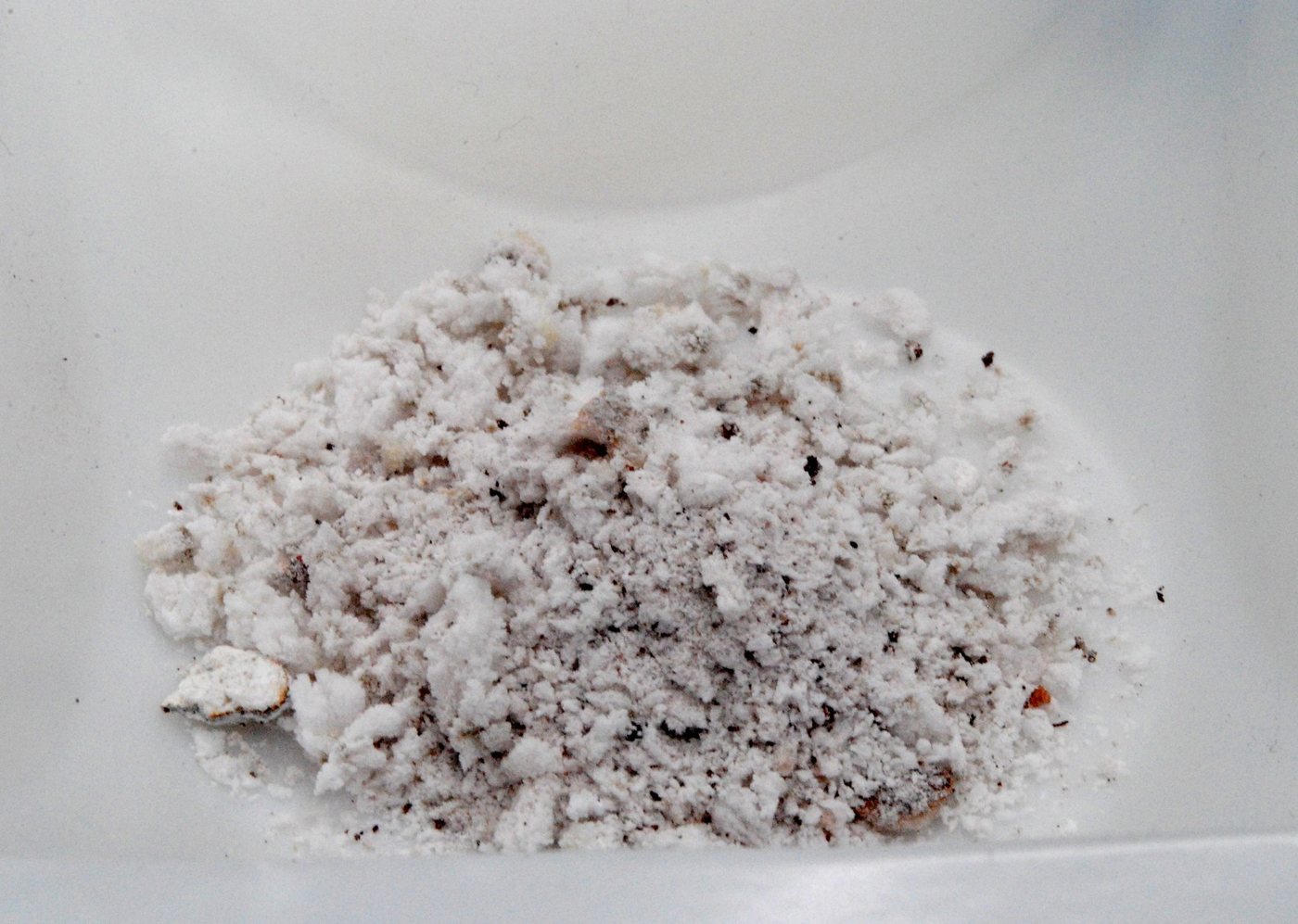
A facility sent a white deposit from a combustion vessel that burns a waste gas containing siloxanes. Silica was the expected residue. The open question was whether it was amorphous silica, which falls outside the respirable crystalline silica standard, or quartz and cristobalite, which fall inside it.
Three measurements
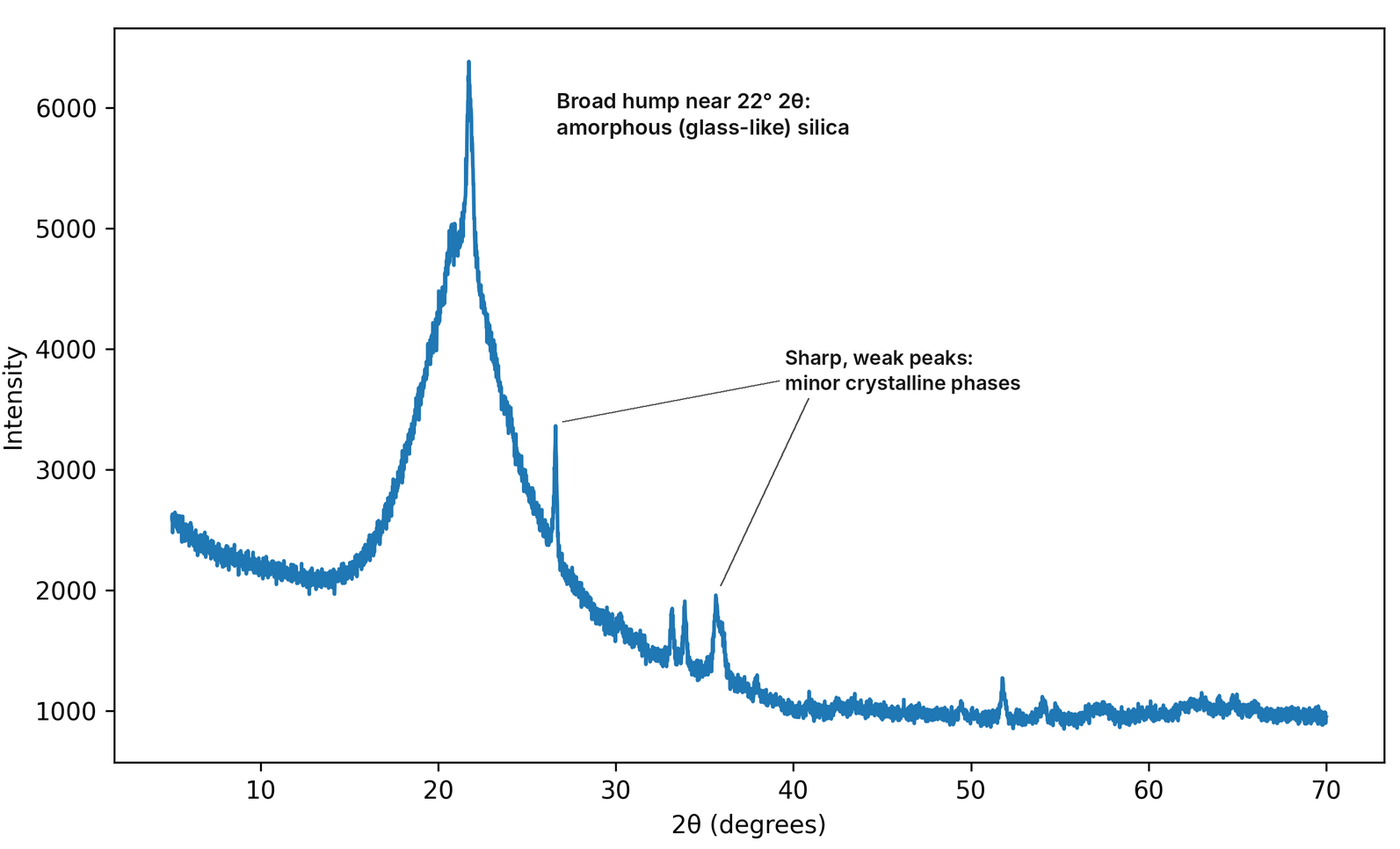
Helium pycnometry gave a density of 2.25 g/cm3, well below quartz at 2.65, so most of the material was glass-like. XRD showed a broad hump near 22° 2θ with only a few weak sharp peaks on top. XRF put silicon at about 96% as SiO2, and the density calculated from that composition landed within 0.1% of the measured value.
What the data indicate
Together the data pointed to roughly 90% amorphous silica, with crystalline silica at an estimated 2 to 6% of the deposit. The rest was iron oxides, an iron silicate, and tin oxide. Iron with chromium and nickel, and tin with antimony, are patterns typical of stainless steel and bearing-metal wear, so the deposit also gave an early hint about nearby rotating equipment.
Limits of this result
The crystalline number is an estimate. Standard Rietveld refinement cannot quantify an amorphous phase without a spiked internal standard, and I recommended that follow-up. For any exposure decision, confirm the results at an accredited lab (NIOSH 7500 or OSHA ID-142) alongside air monitoring. A first look like this shows whether the accredited analysis is worth ordering.