
White Paper
Why a Batch Failed a Leach Test When Its Total Zinc Passed
Final pH of the test fluid, not zinc content, separated the failing batch from the passing batches
Blaise Mibeck · Cubic Labs LLC · November 2026
Download PDF All articles and white papers
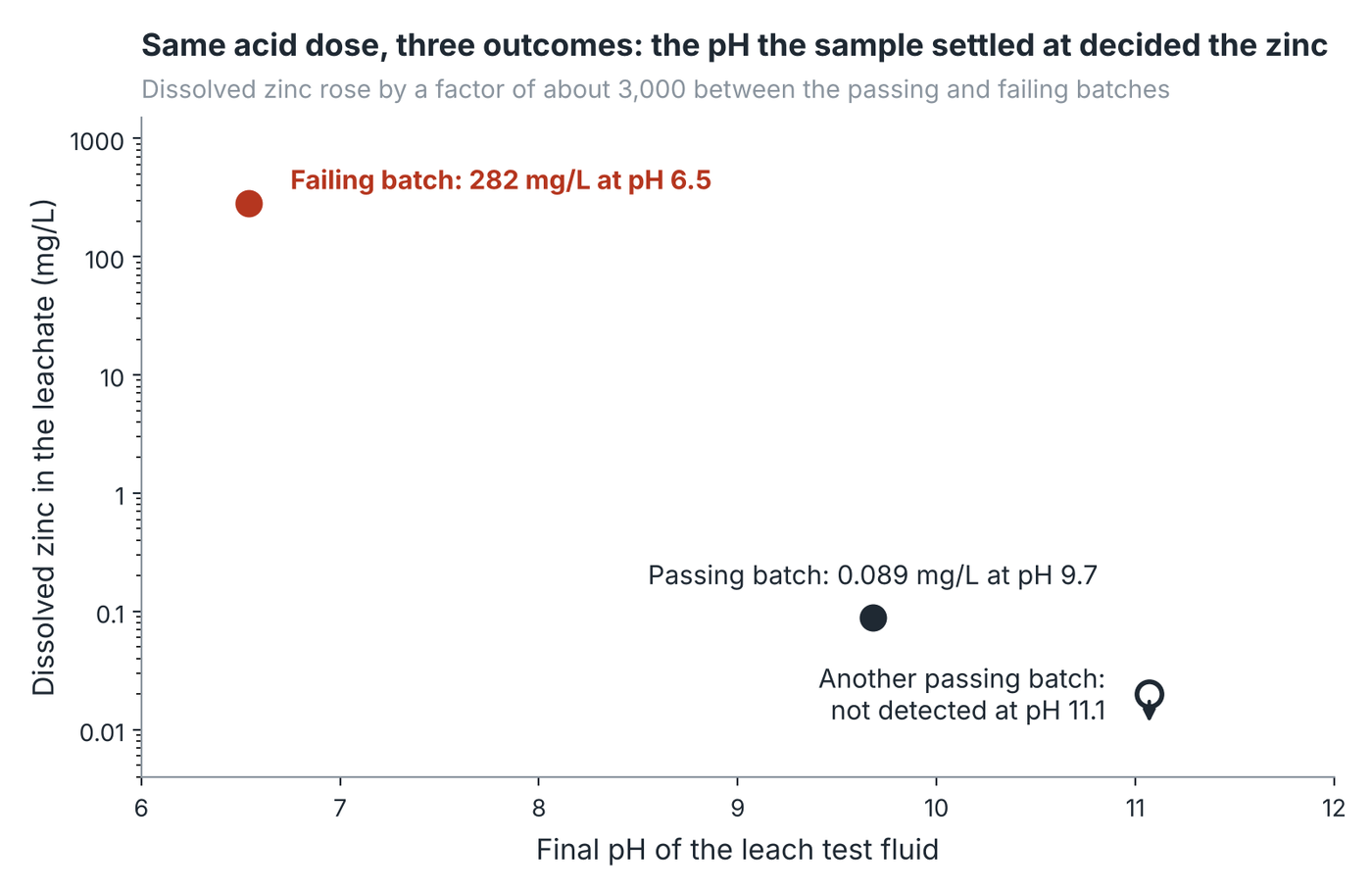
Zinc form (XRD) and porosity (SEM) each fell short as explanations. The leach data showed the cause: the failing batch ran out of alkalinity, finished at pH 6.5, and released 282 mg/L of zinc.
The question
A producer of a recycled, iron-rich metal product had one batch exceed its zinc limit in a leach test, although XRF showed total zinc within limits. I compared the failing batch with passing batches using XRD, SEM, and the producer’s leach data, and tested three explanations.
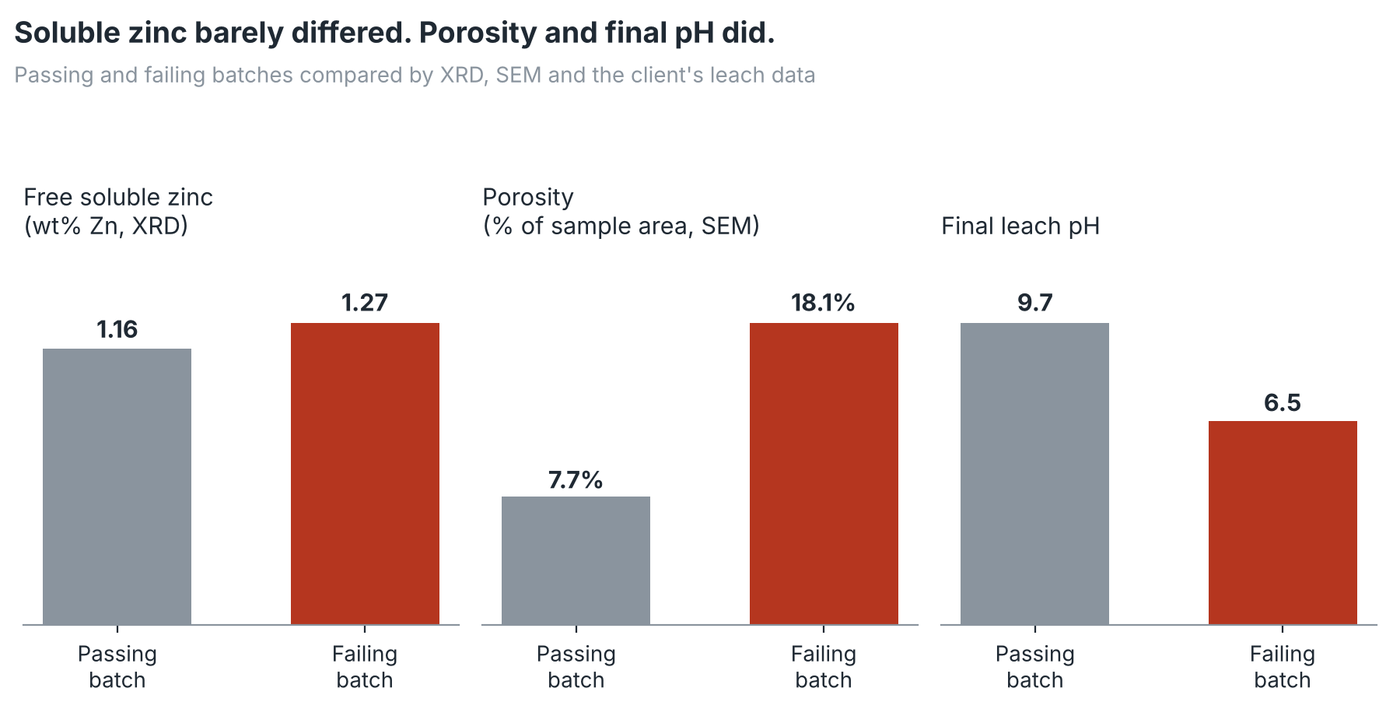
First, the failing batch might hold its zinc in a more soluble form. XRD found similar amounts of soluble zinc oxide in the passing and failing batches (1.16 and 1.27 wt% zinc), so the form of zinc did not explain the difference.
Second, the leach fluid might have reached more of the failing batch. SEM showed the failing batch was 2.4 times more porous (18.1% against 7.7%) and cracked. More porosity helps the fluid reach zinc, but it cannot account for a difference of about 3,000-fold in dissolved zinc.
Third, the batch might control how acidic the test becomes. The test adds the same dose of acid to every sample. A batch with enough alkalinity, which works like an antacid, neutralizes the acid and stays basic, and zinc stays in the solid. A batch that runs out of alkalinity ends up acidic, and zinc dissolves. The producer’s leach data fit this explanation. Zinc oxide solubility changes about 5,000-fold between pH 6.5 and pH 11.
What this means for process control
For a failing batch, ask how much alkalinity it carries as well as how much zinc it contains. A process can be steered against alkalinity. Three batches show the direction of the effect but do not define a pass or fail threshold, so a solid-pH screen on incoming and finished batches should be tested on more batches before anyone relies on it.