
White Paper
Can Salvaged Steel With No Mill Certificate Be Used for Structural Members?
XRF on a rusted coupon: what the composition shows and what it cannot show
Blaise Mibeck · Cubic Labs LLC · November 2026
Download PDF All articles and white papers
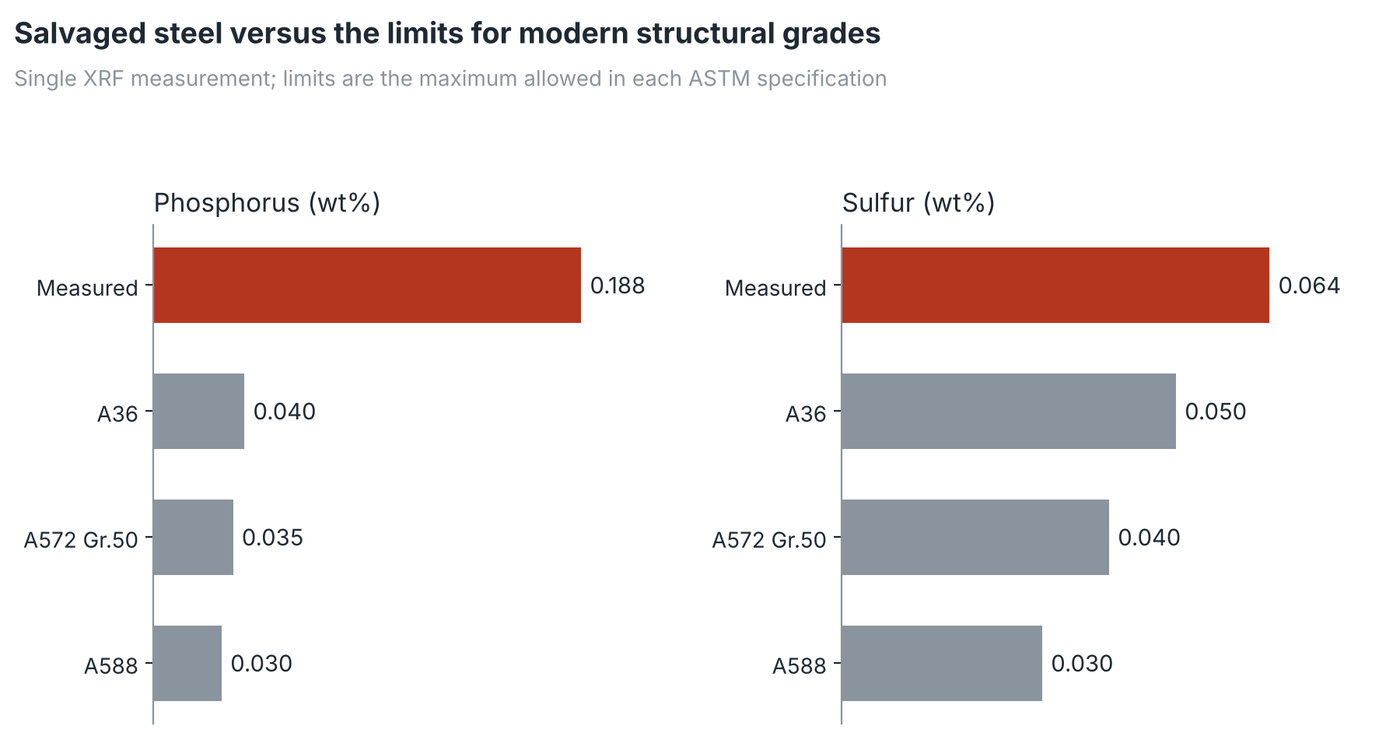
Phosphorus (0.188 wt%) and sulfur (0.064 wt%) exceeded the limits in every structural specification compared. For structural use, the answer in this case was no.
The question
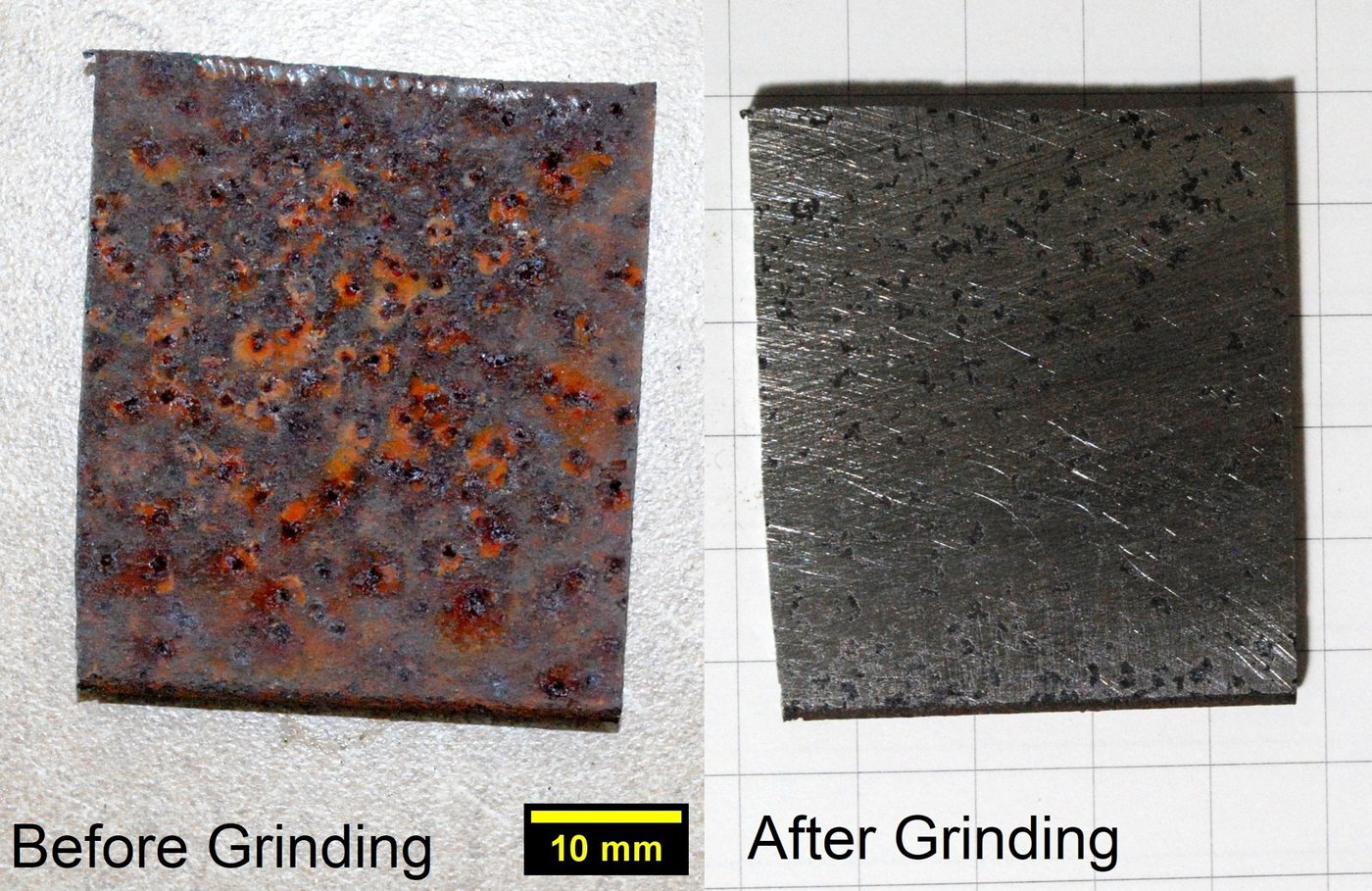
A small company had a piece of salvaged structural steel with no mill certificate and wanted to identify the alloy before reusing it. The surface was heavily rusted, so I ground both faces to bare metal with 120-grit silicon carbide paper and measured the cleaner face by XRF.
What the composition shows
The composition is broadly consistent with an older, low-carbon structural steel of the ASTM A36 type. Phosphorus measured 0.188 wt% and sulfur 0.064 wt%. The specifications I compared against (A36, A572 Grade 50, A588, and A615 Grade 60 rebar) allow 0.03 to 0.06 wt% of each. Phosphorus is about 3 to 6 times the limit, and sulfur exceeds the limit in all four.
Why it matters
Excess phosphorus increases the risk of brittle fracture at low temperatures and reduces weldability, which matters for field welding. The manganese-to-sulfur ratio, about 9, is well below the roughly 20 or higher that modern steelmaking targets. Manganese binds sulfur as manganese sulfide instead of lower-melting iron sulfide, which can cause cracking. Both findings point to steel produced before modern composition controls.
What XRF cannot show
XRF cannot measure carbon, which largely determines strength and weldability, so assigning a grade requires a combustion analysis. One coupon cannot represent a lot, and a match to A36 would indicate similarity, not certification. I recommended measuring a second piece from the same source.
The client learned this before any steel was cut or welded. For undocumented steel, phosphorus and sulfur by XRF make a fast first screen.